The Playful Precision of Fresh Watermelon: A Handwritten Typeface for Modern Design
In a digital landscape saturated with rigid grids, geometric sans-serifs, and corporate serifs, there remains a persistent human craving for warmth and authenticity. This is where Fresh Watermelon enters the conversation. It is not merely a typeface; it is a stylistic intervention designed to inject personality into projects that demand a handwritten touch. Whether you are a graphic designer seeking a unique asset, an educator creating engaging materials, or a business owner looking to humanize your brand voice, understanding the specific utility of this font is essential.
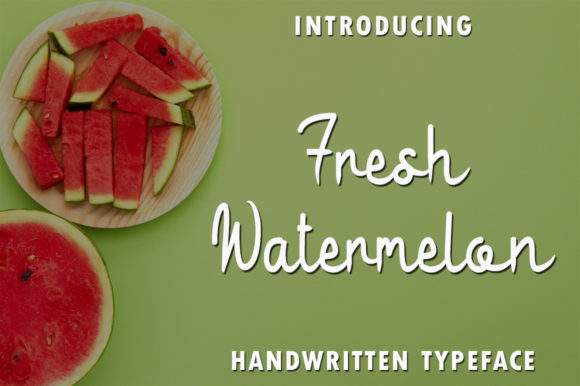
The essence of Fresh Watermelon lies in its ability to mimic the fluidity of ink on paper while maintaining the structural integrity required for legibility. Unlike many display fonts that sacrifice readability for style, this typeface strikes a balance between artistic flair and functional communication. It captures the spontaneity of a quick note scribbled on a napkin but elevates it through consistent character weights and spacing that make it suitable for professional applications.
Visual Characteristics and Design Philosophy
To appreciate Fresh Watermelon, one must first look at its visual DNA. The font is characterized by rounded terminals and variable stroke widths that simulate the pressure changes of a marker or brush. These features give the letters a bouncy, organic feel, as if they were written in a single, continuous motion. The "handwritten" quality does not mean it looks messy; rather, it suggests a deliberate, personal touch that standard computer fonts often lack.
The design philosophy behind this typeface focuses on approachability. In typography, the shape of a letter influences how the reader perceives the message. Sharp angles can convey authority, urgency, or coldness, whereas the soft curves found in Fresh Watermelon suggest friendliness, creativity, and openness. This makes it an ideal candidate for contexts where building trust and rapport is the primary goal.
- Rounded Geometry: The absence of sharp points reduces visual aggression, making text easier to scan and more inviting to read.
- Variable Stroke Weight: The fluctuation in line thickness adds dynamic movement, preventing the text from appearing static or flat.
- Ink-like Texture: Even in digital formats, the font retains a subtle texture that mimics the absorption of ink into paper, adding depth to the design.
Practical Applications Across Industries
The versatility of Fresh Watermelon allows it to transcend niche markets and find relevance in broad sectors. Its application is not limited to children's books or party invitations; it serves as a powerful tool for professionals who wish to break away from traditional corporate aesthetics without losing clarity.
Branding and Identity Systems
For startups and small businesses, establishing a distinct identity is crucial. Using a standard font like Arial or Helvetica can cause a brand to blend into the background. By incorporating Fresh Watermelon into logos, packaging, or marketing collateral, companies can instantly signal that they value creativity and human connection. Imagine a local bakery using this font on their signage; the immediate association is freshness, homemade quality, and a welcoming atmosphere. The font acts as a visual shorthand for the brand's values before a customer even reads the copy.
Educational Materials and Content Creation
Educators and instructional designers face the challenge of keeping learners engaged. Text-heavy slides or worksheets can induce cognitive fatigue. Integrating Fresh Watermelon as a heading font or for key takeaways can re-energize learning materials. It transforms a dry lecture note into something that feels like a teacher's personal advice. For content creators, whether writing blogs, newsletters, or social media captions, this font helps establish a conversational tone. It bridges the gap between the creator and the audience, making the content feel less like a broadcast and more like a dialogue.
Digital Product Interfaces
While body text usually requires high legibility and neutrality, interface design often benefits from personality in micro-interactions. Buttons, call-to-action elements, and error messages can utilize Fresh Watermelon to soften the user experience. When a user encounters an error, a playful font can reduce frustration compared to a stark, robotic warning. Similarly, in app onboarding screens, this typeface can guide users with a sense of encouragement rather than instruction.
Strategic Advantages for Creators and Businesses
The decision to adopt a specific typeface is rarely just about aesthetics; it is a strategic choice that impacts user perception and engagement. Fresh Watermelon offers several tangible advantages for those looking to optimize their visual communication.
- Enhanced Emotional Connection: Human brains are wired to respond to handwriting. Seeing a font that mimics the human hand triggers a psychological response associated with personal effort and care. This emotional resonance can increase time spent on page and improve recall rates for branding.
- Standout Visual Hierarchy: In a sea of uniform typography, a handwritten element creates a natural focal point. Designers can use Fresh Watermelon to guide the reader's eye to headlines or important data points without relying solely on size or color contrast.
- Versatility in Tone: One of the most impressive aspects of this font is its range. Depending on the pairing, it can be whimsical, sophisticated, or casual. It adapts to the context, allowing a single typeface family to serve multiple purposes within a project.
- Cost-Effective Customization: Hiring a custom calligrapher for every project is expensive and time-consuming. Using a pre-designed font like Fresh Watermelon provides a similar aesthetic result at a fraction of the cost, ensuring consistency across all deliverables.
Implementation Best Practices and Considerations
While the benefits are clear, successful implementation requires a thoughtful approach. Typography is a system, and introducing a display font like Fresh Watermelon requires balancing it with other elements to maintain harmony. The following guidelines ensure that the font enhances rather than detracts from the overall design.
Pairing Strategies
The success of Fresh Watermelon often depends on what it is paired with. Because the font is visually busy and expressive, it works best when contrasted with clean, neutral typefaces. A classic combination involves using Fresh Watermelon for headings and subheadings, while utilizing a simple sans-serif or serif font for body text. This contrast ensures that the decorative nature of the headline does not interfere with the readability of the paragraph text. If both the header and body are handwritten, the design can quickly become chaotic and difficult to process.
Limited Usage for Maximum Impact
A common mistake in design is overusing display fonts. Just because Fresh Watermelon is fun does not mean it should be applied to every word on a page. Restrict its usage to titles, pull quotes, buttons, or short phrases. Long blocks of text in this font can strain the eyes due to the irregular shapes and varying stroke widths. Treat it as a spice: a little goes a long way, and too much ruins the flavor of the dish.
Contextual Relevance
Before selecting this font, consider the medium and the audience. While it is excellent for print, web, and social media, it may not be suitable for formal legal documents, technical manuals, or environments requiring extreme precision. The "handwritten" vibe implies informality. If the subject matter demands strict seriousness, such as financial reports or medical instructions, a more structured typeface is necessary. However, even in these fields, a small accent using Fresh Watermelon in a sidebar or logo can add a layer of approachability.
The Future of Personalized Digital Communication
As we move further into an era dominated by artificial intelligence and automated content generation, the value of human-centric design is likely to increase. People are becoming more aware of the "uncanny valley" of digital text—content that looks perfect but feels soulless. Fresh Watermelon represents a counter-movement to this trend. It brings the imperfections of human creation back into the digital realm, reminding us that technology should serve to amplify our humanity, not replace it.
For researchers and hobbyists studying the intersection of psychology and design, this font offers a case study in how visual cues influence behavior. The rounded forms and fluid lines trigger positive affective responses, which can be leveraged in UX design to improve user satisfaction. As the market for custom digital assets grows, fonts that offer this level of character will become increasingly valuable tools for anyone looking to differentiate their work.
Conclusion: A Tool for Authentic Expression
In summary, Fresh Watermelon is more than just a font choice; it is a method of communication that prioritizes warmth, creativity, and human connection. Its unique characteristics make it a powerful asset for professionals, educators, and creators alike. By understanding its strengths and applying it with strategic intent, users can transform ordinary designs into memorable experiences. Whether used to label a jar of homemade jam or to headline a cutting-edge tech blog, this typeface delivers a message that resonates on a fundamental level: this was made with care.
As you embark on your next project, consider the story you want to tell. If that story requires a personal touch, a sense of fun, or a break from the mundane, let Fresh Watermelon be the voice of your design. It stands ready to bring a handwritten soul to your digital canvas, proving that even in a world of pixels, the human hand still matters.