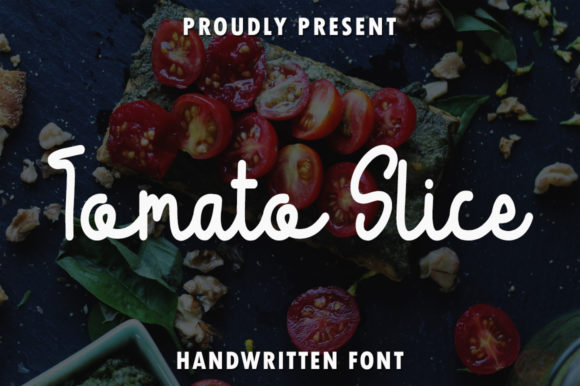
Tomato Slice: A Masterpiece of Handwritten Elegance for Your Next Design
In a digital landscape often dominated by rigid geometric sans-serifs and blocky serifs, Tomato Slice stands out as a refreshing departure. It is not merely a typeface; it is a delicate and elegant handwritten font that captures the fluidity of ink on paper while maintaining the legibility required for modern screens. Its distinct and well-rounded letters make this font a masterpiece, offering creators an immediate sense of warmth and approachability.
However, just because a font looks beautiful in isolation does not guarantee it will work effectively in your project. Many designers fall into the trap of selecting a script based solely on its aesthetic appeal without considering how it functions within a broader composition. If you are looking to create spectacular designs using Tomato Slice, you must first understand the nuances of applying a handwritten style correctly. This guide walks you through common pitfalls and provides practical advice to ensure your typography enhances rather than hinders your message.
The Allure and the Risk of Script Fonts
It is easy to be drawn to the curves of Tomato Slice. The way the strokes connect and the natural variation in line weight give it a human touch that sterile fonts simply cannot replicate. For entrepreneurs, bloggers, and small business owners, this font offers a unique opportunity to personalize their brand voice. It feels intimate, like a note written by hand, which can significantly boost engagement with your audience.
Yet, this very characteristic is also where many professionals stumble. The most frequent mistake involves overusing script fonts or placing them in contexts where they lack clarity. Because Tomato Slice is so expressive, it demands attention. If you use it for body text or dense blocks of information, you risk overwhelming your reader. The eye naturally struggles to track long lines of handwriting-style text, leading to fatigue and reduced comprehension.
To avoid this, remember that scripts are best used as accents. They should highlight key messages, titles, or short phrases rather than carrying the entire weight of your content. Think of Tomato Slice as the garnish on a gourmet dish—it adds flavor and visual interest, but it is not the main course.
Common Pitfalls in Selection and Application
When evaluating any font, including Tomato Slice, it is crucial to look beyond the initial impression. One overlooked detail is the x-height and the openness of the letterforms. While Tomato Slice features well-rounded letters that are generally friendly, some variations of similar fonts suffer from tight counters (the enclosed spaces inside letters like 'a', 'e', or 'o'). If the spacing is too narrow, the text can appear muddy, especially at smaller sizes or on low-resolution displays.
Another significant error is failing to pair the font correctly. A handwritten style needs a strong counterpart to balance its organic nature. Pairing Tomato Slice with another decorative or equally complex font creates visual chaos. Instead, opt for a clean, neutral sans-serif or a classic serif to ground the design. This contrast ensures that the elegance of the script shines without competing for dominance.
- Mistake: Using Tomato Slice for long paragraphs of instructional text.
- Correction: Reserve it for headlines, pull quotes, and call-to-action buttons.
- Mistake: Choosing colors with low contrast between the text and background.
- Correction: Ensure high contrast to maintain readability, particularly for users with visual impairments.
- Mistake: Ignoring the impact of kerning (spacing between letters).
- Correction: Manually adjust spacing if the automatic settings feel too loose or too tight, as scripts rely heavily on proper spacing to flow naturally.
Evaluating Usability Before You Buy
Before you download or purchase Tomato Slice, take a moment to test it rigorously. It is tempting to assume that a font labeled "versatile" will work everywhere, but versatility in typography often comes with specific boundaries. Check how the font behaves across different devices. Does the rendering hold up on mobile screens? Do the delicate strokes disappear on older monitors?
Additionally, consider the technical requirements of your platform. Some web platforms do not support custom fonts natively, requiring you to convert the font into web formats like WOFF or WOFF2. If you are a freelancer or agency managing multiple client projects, ensure that the licensing agreement for Tomato Slice covers all intended uses, such as print, digital, and commercial distribution. Failing to check these details can lead to legal issues or the need to rebrand entirely after launch.
For educators and marketers, the context of the message is paramount. If you are creating educational materials, clarity is non-negotiable. While Tomato Slice is excellent for introducing a topic or adding a personal touch to a newsletter header, it may not be suitable for detailed explanations. In these cases, stick to highly legible fonts for the core content and use the script sparingly to break up the visual monotony.
Practical Strategies for Better Results
To maximize the impact of Tomato Slice, focus on hierarchy. Use the font's distinct personality to guide the viewer's eye. Start with a large, bold headline in the script to grab attention, then transition immediately to a simpler font for the supporting details. This approach creates a rhythm that keeps the reader engaged without causing confusion.
Consider the emotional tone you wish to convey. Tomato Slice is inherently warm and inviting. It works exceptionally well for lifestyle brands, bakeries, wedding invitations, and creative portfolios. However, if you are designing for a financial institution or a medical practice, you might find that the font conveys too much informality. In such professional sectors, a more structured typeface might better communicate trust and authority.
If you are new to typography, start small. Create a few mockups using Tomato Slice alongside your standard fonts. Test them in black and white to ensure the shapes remain distinct without the distraction of color. Once you are satisfied with the structure, introduce color and texture. This methodical approach prevents costly mistakes later in the production process.
Maximizing Versatility Without Compromise
The true power of Tomato Slice lies in its incredible versatility when applied with intention. It can transform a generic corporate presentation into something memorable, or turn a simple blog post into a story. The key is to respect the font's nature. Do not force it into roles it was not designed for.
For hobbyists and DIY enthusiasts, this font is a goldmine. It allows you to create personalized labels, greeting cards, and social media graphics that feel authentic. However, always ensure that the resolution of your final output matches the intricacy of the font. Printing a delicate script on a low-quality printer can result in broken lines and lost details. Always proofread your physical prints before committing to a full run.
Ultimately, the goal is to enhance communication, not obscure it. By understanding the strengths and limitations of Tomato Slice, you can avoid the common errors that plague poorly executed designs. Whether you are a seasoned professional or just starting your journey, taking the time to evaluate your choices leads to superior results. Embrace the elegance of this handwritten masterpiece, but wield it with care to ensure your designs remain clear, effective, and truly spectacular.