Why Lexie Stands Out in a Crowded Typography Landscape
Selecting the right typeface is rarely a trivial decision. For designers, content creators, and brand strategists, the font chosen for a project carries significant weight. It dictates readability, sets the emotional tone, and often determines whether a message lands effectively with its intended audience. In an era where digital screens dominate our visual experience, finding a typeface that balances character with functionality is more critical than ever. This is where Lexie enters the conversation, offering a distinct alternative to the ubiquitous sans-serif trends that have long ruled the web.
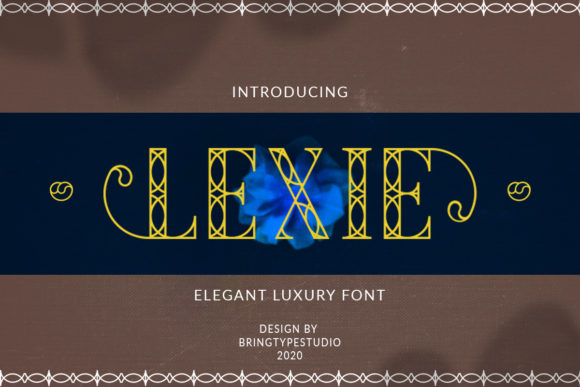
Lexie is a fun-looking serif font designed to bring warmth and personality to any design system. Unlike many modern serif fonts that lean heavily towards strict minimalism or academic formality, Lexie embraces a playful yet professional aesthetic. Its unique structure allows it to serve as a versatile asset in a designer's library, capable of elevating everything from editorial layouts to marketing collateral. But does it truly fit every need? To answer that, we must look closely at what makes this typeface distinct and how it compares to other options available today.
The Distinctive Character of Lexie
At first glance, Lexie presents itself as a classic serif, but a closer examination reveals nuances that set it apart. The term "fun-looking" in typography often implies a departure from rigid grid structures, and Lexie delivers on this promise without sacrificing legibility. The letterforms feature subtle variations in stroke weight and terminal shapes that give the text a handcrafted feel. This organic quality is particularly valuable in an age where digital content can often feel sterile and mass-produced.
The versatility of Lexie lies in its ability to bridge the gap between traditional print aesthetics and modern digital requirements. Many serif fonts struggle when scaled down for mobile devices, becoming too intricate to read. However, Lexie has been engineered with screen optimization in mind. Its x-height is generous, ensuring that even smaller sizes remain clear and inviting. This balance makes it an incredibly useful tool for creating content that needs to perform well across various platforms, from high-resolution desktop monitors to compact smartphone displays.
Furthermore, the "fun" aspect of Lexie does not detract from its professionalism. Instead, it adds a layer of approachability. When used in headlines or pull quotes, it draws the eye and invites the reader to engage. In body copy, it maintains a steady rhythm that prevents fatigue during long reading sessions. This dual capability is rare; many fonts are either too stiff for creative projects or too casual for corporate communications. Lexie manages to occupy a middle ground that appeals to a broad spectrum of users.
Evaluating Lexie Against Current Design Trends
To understand the value of Lexie, it is helpful to compare it against the prevailing styles in the current design landscape. Over the last decade, the industry has seen a massive shift toward grotesque and neo-grotesque sans-serifs. These fonts are favored for their neutrality and clarity, making them safe choices for user interfaces and data-heavy dashboards. While effective, this trend has led to a homogenization of digital experiences, where many websites and applications look remarkably similar.
Lexie offers a compelling counter-narrative to this uniformity. By reintroducing the serif, it brings back a sense of heritage and authority that sans-serifs sometimes lack. However, unlike historical serif fonts that can feel dated or overly ornate, Lexie feels contemporary. It avoids the heavy contrast between thick and thin strokes found in old-style serifs, which can cause rendering issues on lower-quality screens. Instead, it utilizes a more moderate contrast that ensures consistency while maintaining the structural elegance of a serif.
- Readability: While some decorative serifs sacrifice legibility for style, Lexie prioritizes clarity. Its open counters and distinct letter spacing ensure that text remains easy to scan.
- Voice: Sans-serifs often convey a neutral, objective voice. Lexie introduces a subjective, human element that can make content feel more personal and relatable.
- Visual Hierarchy: The unique characteristics of Lexie allow designers to create stronger visual hierarchies within a single page. A headline in Lexie naturally stands out against body text set in a simpler sans-serif, creating a dynamic composition.
However, this comparison highlights a crucial tradeoff. The very qualities that make Lexie distinctive also limit its application in certain contexts. If a project requires absolute neutrality, such as a government dashboard or a medical alert system, the playful nature of Lexie might be inappropriate. In these scenarios, a more utilitarian font is likely the better choice. Understanding these boundaries is essential for making an informed decision about whether Lexie fits your specific project requirements.
When Lexie is the Right Choice
Determining when to use Lexie involves analyzing the goals of the project and the emotions you wish to evoke. This font excels in environments where storytelling and connection are paramount. For lifestyle blogs, fashion magazines, or boutique brand websites, Lexie provides the perfect backdrop for narratives that require a touch of whimsy and charm. It transforms standard text into an experience, encouraging readers to linger longer on the page.
In educational materials, Lexie can play a vital role in engaging younger audiences or making complex topics feel less intimidating. The friendly appearance of the letters helps lower the barrier to entry for learners, making the content feel accessible rather than authoritative and distant. Similarly, in packaging design for consumer goods, Lexie can help a product stand out on a shelf crowded with generic, minimalist branding. Its distinct shape creates immediate visual interest.
For designers building a comprehensive font library, Lexie represents a strategic addition. Most libraries contain a robust collection of sans-serifs and a few standard serifs like Garamond or Baskerville. Adding Lexie fills a gap for a modern, expressive serif that can be used for both display and text purposes. It expands the range of voices available to the designer, allowing for more nuanced communication strategies.
Limited Applications and Considerations
Despite its strengths, Lexie is not a universal solution. There are specific situations where another option would serve the user better. For instance, in technical documentation, legal contracts, or financial reports, the priority is usually maximum clarity and zero distraction. In these cases, the slight stylistic flair of Lexie could be perceived as unprofessional or distracting. Here, a clean, highly legible sans-serif or a very conservative serif is preferable.
Another consideration is the volume of text. While Lexie works well for short-to-medium lengths, using it for entire novels or extensive code documentation might lead to reader fatigue over time. The distinct personality of the font, while engaging initially, can become overwhelming if present in every single line of text for hours. In such cases, it is often best to reserve Lexie for headings, captions, and emphasis, pairing it with a more neutral typeface for the bulk of the content.
Additionally, accessibility should always be a primary concern. While Lexie is generally legible, designers must test it against WCAG guidelines, particularly regarding color contrast and minimum font sizes. Some users with dyslexia or low vision may find the varied stroke widths of certain serif fonts challenging to process. Ensuring that Lexie meets these accessibility standards is a necessary step before deploying it in public-facing applications.
Making the Final Decision
Ultimately, the choice to incorporate Lexie into a project depends on a careful evaluation of the brand voice, the target audience, and the medium of delivery. It is a powerful tool for those looking to add warmth and distinction to their work, but it requires a thoughtful approach to implementation. By understanding its strengths and acknowledging its limitations, designers can leverage Lexie to create memorable and effective designs.
As the digital landscape continues to evolve, the demand for typefaces that offer character without compromising function will only grow. Lexie positions itself perfectly to meet this demand, serving as a bridge between the past and the future of typography. Whether used to elevate a simple blog post or to define the identity of a new brand, this font proves that a little bit of fun can go a long way in capturing attention and fostering connection.
For professionals comparing options, the lesson is clear: there is no single "best" font for every situation. The key is to match the tool to the task. If the goal is to create something engaging, warm, and visually striking, Lexie is a strong contender. If the goal is pure utility and neutrality, other options may be more suitable. By weighing these factors, creators can make decisions that enhance their work and resonate with their audience.